QU'EST-CE QUE TU CHERCHES?
Recherches populaires

Le Vietnam a officiellement introduit une réglementation révisée sur la responsabilité élargie des producteurs (REP), établissant des exigences plus claires en matière de collecte, de recyclage et de réutilisation des emballages de boissons, y compris les canettes en aluminium.
Le nouveau cadre réglementaire, défini par le décret n° 110/2026/ND-CP, est entré en vigueur le 25 mai 2026. Il impose aux fabricants et importateurs mettant sur le marché vietnamien des produits et emballages responsables de leur récupération, de leur traitement et du reporting associé après utilisation. Pour le secteur des emballages de boissons, ces changements devraient impacter les marques, les conditionneurs, les importateurs et les autres acteurs de la chaîne d'approvisionnement locale.
Le ministère vietnamien de l'Agriculture et de l'Environnement a déclaré que la réglementation révisée vise à fournir des orientations plus précises sur les responsabilités des producteurs et des importateurs en matière de recyclage et de traitement des déchets. Cette politique va au-delà de la simple élimination des déchets et met davantage l'accent sur l'économie circulaire et la transformation des déchets en ressources réutilisables.
Le décret apporte également des précisions sur la répartition des responsabilités en matière de recyclage selon les différents modèles de chaîne d'approvisionnement. Dans le cadre de la fabrication sous contrat, c'est généralement le donneur d'ordre qui est responsable du recyclage. Dans le cadre de l'importation sous contrat, cette responsabilité incombe généralement à l'organisme ou à la personne chargée de l'étiquetage des produits. Lorsque des produits ou des emballages portant la même étiquette sont fabriqués par différents producteurs, c'est généralement la partie responsable de l'étiquette qui est tenue de respecter l'obligation de recyclage.
Un système national d'information sur la responsabilité élargie des producteurs (REP) a été mis en place comme plateforme obligatoire d'enregistrement, de déclaration et de reporting. Les producteurs et importateurs qui organisent leurs propres activités de recyclage doivent enregistrer leurs plans de recyclage et déclarer les résultats de recyclage des produits et emballages mis sur le marché au cours de l'année précédente. Ceux qui choisissent de verser une contribution financière doivent en déclarer le montant. Les rapports de recyclage doivent également être vérifiés par un organisme d'audit indépendant.
À mesure que la mise en œuvre progresse, des problèmes pratiques sont apparus concernant la stabilité de la plateforme de déclaration, l'exactitude des calculs automatiques et la transparence des mécanismes de contribution financière. Les autorités vietnamiennes ont indiqué que le Système national d'information sur la REP continue d'être revu et amélioré afin d'accroître sa cohérence, sa fiabilité et la conformité des entreprises.
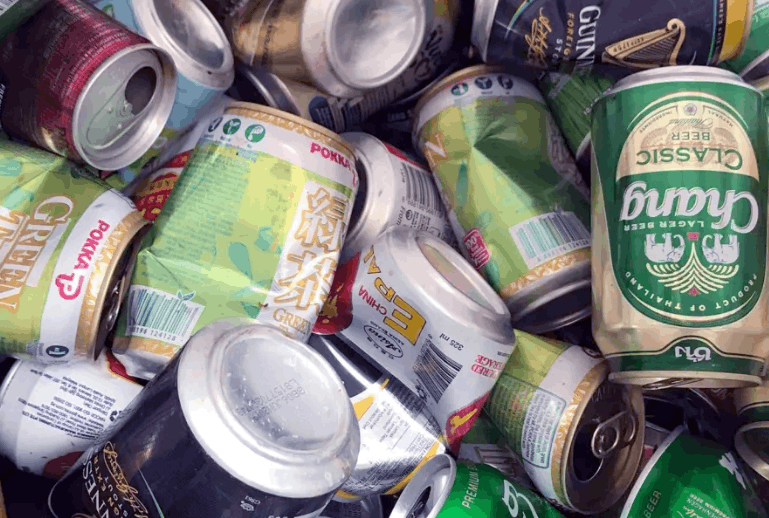
Les canettes en aluminium restent un élément important du marché vietnamien de l'emballage des boissons. Une étude récente estime que les canettes en aluminium et les bouteilles en PET représentent environ 98 % du marché national des contenants de boissons à usage unique. Les canettes en aluminium représentent environ 65 % du marché total, contre environ 33 % pour les bouteilles en PET.
La même étude estime les taux de collecte actuels à environ 80 % pour les canettes en aluminium et à 50 % pour les bouteilles en PET. Si les emballages en aluminium bénéficient déjà d'une collecte relativement performante, les progrès futurs dépendront de l'amélioration de la qualité, de la traçabilité et de la valorisation des matériaux récupérés.
L'étude suggère également qu'un système de consigne pour les emballages de boissons à usage unique pourrait détourner jusqu'à 77 000 tonnes de déchets d'emballage des décharges chaque année, réduire les émissions de carbone d'environ 265 000 tonnes et créer des opportunités d'emploi supplémentaires dans les secteurs du recyclage formel et informel.
La nouvelle réglementation vietnamienne en matière de responsabilité élargie des producteurs (REP) témoigne d'une volonté plus globale de renforcer les infrastructures de recyclage, d'améliorer la transparence des systèmes de déclaration et de renforcer la responsabilisation tout au long de la chaîne de valeur des emballages de boissons. Pour l'industrie des emballages de boissons en aluminium, la compétitivité future dépendra probablement non seulement de la qualité des produits et des capacités d'approvisionnement, mais aussi des performances en matière de recyclage, de la circularité des matériaux et des solutions d'emballage durables.
Source : Canmaker ; informations publiques du ministère vietnamien de l'Agriculture et de l'Environnement
 sales@xmbaofeng.com
 +8613606907586
 +86 (592) 7116660